
When power cuts out across a business storefront or residential roofline, the failure usually traces back to moisture intrusion in outdoor connections or overloaded dedicated circuits. At Chicago Christmas Lights, our crews inspect commercial lighting in Batavia, IL to pinpoint ground faults, balance amperages across independent panel breakers, and restore full illumination without risking electrical fires.
Key Takeaways
- Moisture inside outdoor electrical connections causes most nuisance ground-fault trips during freezing Illinois rain and snow.
- Standard commercial circuits safely handle only 80 percent of their rated continuous load under national safety guidelines.
- Splitting expansive roofline runs across separate line phases prevents heavy draw spikes from popping individual wall switches.
- Corroded copper prongs and pinched cords demand immediate replacement rather than temporary electrical tape patches.
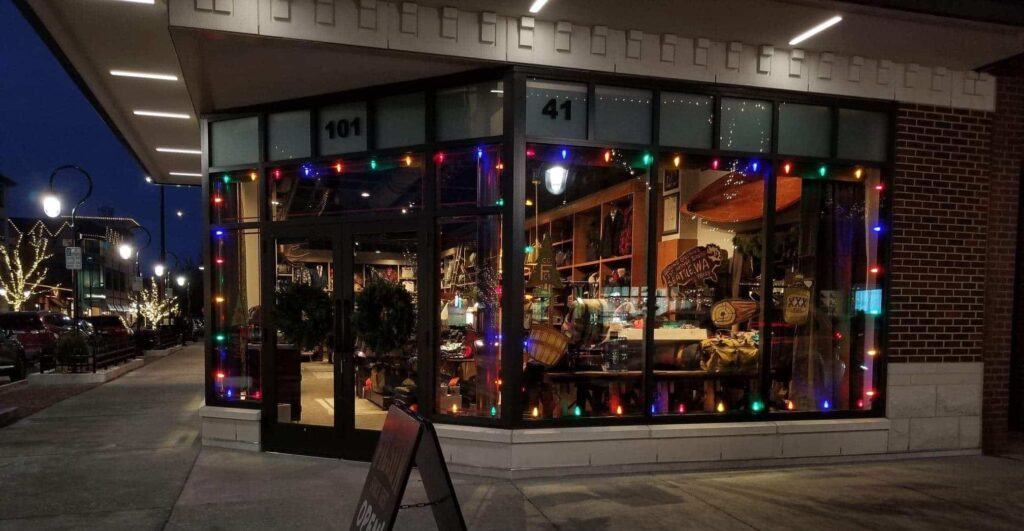
What Causes Holiday Light Breakers To Trip Repeatedly?
Ground fault circuit interrupters trip when moisture enters an open electrical plug or when the total continuous wattage exceeds eighty percent of circuit capacity. Ice melt seeping into connection points creates an immediate current leakage to ground, cutting power instantly. When business owners search for Batavia, IL, christmas lighting near me, they often discover that damp turf lines, cracked male plugs, or overloaded retail branch circuits are silently shutting down their entire outdoor installation.
How Does Weather In Batavia Create Sudden Outages?
Heavy freezing rain mixed with rapid Fox Valley temperature swings forces liquid moisture straight into micro-fissures around standard socket seals. Once water bridges the hot and neutral brass terminals inside an exterior socket, your breaker panel detects the imbalance and snaps shut. Commercial lighting in Batavia, IL requires sealed dielectric grease fittings, elevated junction connections, and weatherproof in-use covers to resist winter slush buildup along sidewalk curbs and low parapet walls.
How Do Crews Troubleshoot Dark Displays In Batavia?
Commercial property owners looking for Christmas lights installation in Batavia, IL or surrounding Fox River services require an orderly method to isolate shorts without guesswork.
- Isolate individual line runs: Technicians unplug every sub-line to check if the supply breaker resets cleanly under zero load.
- Meter the amperage draw: Crews run digital clamp meters across the hot wire to ensure continuous draw stays well beneath fifteen amps.
- Inspect low-lying junction points: Installers elevate wet extension splitters off soggy mulch beds, frozen turf, and pooling concrete slabs.
- Reseal damaged terminal ends: Workers replace loose plugs with heavy-duty heat-shrink ends to lock out driving wind and melting sleet.
Many maintenance managers calculate bulb wattage based solely on initial packaging numbers, completely forgetting that cold LED power supplies draw brief inrush spikes when turned on simultaneously. If your display runs forty commercial lighting strands on a single twenty-amp line, that sudden power surge will pop a cold thermal breaker within seconds of the evening timer kicking in. Anyone needing Batavia Christmas light installation near me should make sure their installer separates high-draw wall washers and roofline runs across two distinct phases.
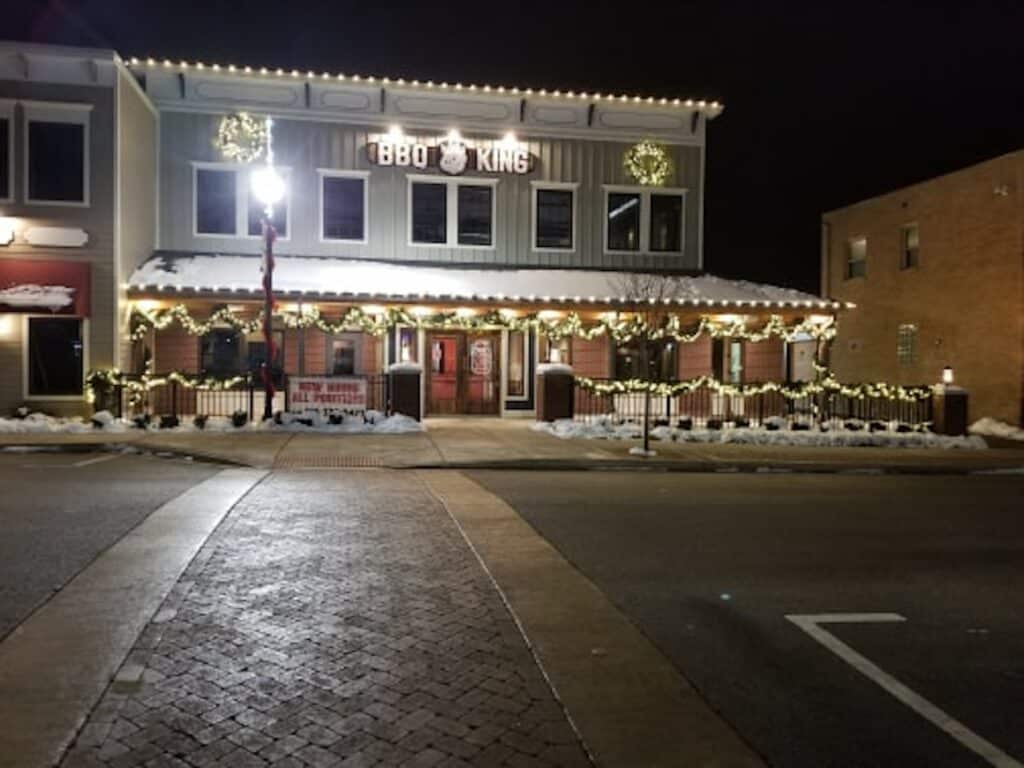
Upgrade To Trouble-Free Commercial Lighting In Batavia, IL
Tripping breakers cost you foot traffic, project an abandoned storefront image, and waste valuable staff hours flipping switches in freezing utility rooms. Let our experienced installation crew balance your electrical loads, weather-proof your exterior runs, and keep your property glowing bright every evening this winter. Call (888) 334-9627 to schedule your lighting audit.
Why Does My GFCI Outlet Trip Only When It Snows?
Melting snow runs directly into non-waterproof cord connections, leaking electric current into the ground and triggering the safety shutoff. Even a tiny droplet of water bridging the gap between plug prongs causes an immediate trip. Elevating all extension connections on mounting stakes and wrapping them in weather-tight junction shields eliminates this seasonal problem.
How Many Strings Of Lights Can I Run On One Commercial Outlet?
You can safely run up to fifteen hundred watts on a standard fifteen-amp circuit without exceeding continuous load limits. While modern commercial LED strands draw very low power, daisy-chaining too many lines together can overheat thin gauge wires. Spreading larger lighting layouts across separate, dedicated outdoor wall outlets prevents blown fuses.
Can Cold Wind Pop An Outdoor Breaker?
Wind does not trip breakers directly, but heavy gusts whip unclipped cords against abrasive gutters and roof edges until wires rub raw. When bare copper touches grounded metal flashing or wet gutters, a severe short circuit occurs immediately. Fastening every run securely with durable commercial surface clips stops wind damage entirely.
Will Using Dielectric Grease Stop My Outlets From Tripping?
Yes, applying specialized non-conductive dielectric silicone compound into plug receptacles blocks moisture from bridging the electrical contacts. This simple step prevents cold rainwater and slush from triggering sensitive safety outlets. Professional installers use this technique along roof parapets and damp foundation planting beds.
What Is The Difference Between A Blown Fuse And A Tripped Breaker?
A tripped breaker is a reusable mechanical switch inside your main electrical panel, whereas a blown plug fuse must be pulled and replaced. Most retail light strands include small glass tube fuses hidden inside the male slide plug that burn out during power spikes. Commercial lighting lines use heavy-duty direct wiring protected entirely at the main breaker box.